
A sovereign cloud, our own DNS root and Root CA, a defence-led research base that builds for keeps, and a real national cybersecurity strategy that outlives electoral cycles are not vanity projects. They are the difference between a nation that can be switched off and one that cannot, points out Venkata Satish Guttula.

'You have to get private investment to somewhere between 35% to 36% of GDP. It is hovering about 30%-31%.'

Modi inaugurated the Semicon India 2025 in Delhi, in the presence of Chief Minister Rekha Gupta, and Union Minister of Commerce and Industry Jitin Prasada.

The global artificial intelligence (AI) boom has significantly reshaped equity markets, with Taiwan surpassing India to become the world's fifth-largest stock market. India has seen its market capitalisation decline by 7% year-to-date, while AI-linked economies like Taiwan and South Korea have surged.

Krutrim, India's first AI unicorn, has successfully repositioned itself as a focused domestic AI Cloud Services provider, reporting its first annual net profit in FY26.

India's first trillion-dollar company will be built on technology it owns, not just operates, predicts Ajay Kumar.

'When I look at India's relative valuations, these are by far the lowest I have seen in my 35-year career.' 'The relative 12-month trailing performance is among the weakest I have seen, and foreign investor positioning is at a 16-17 year low.'

For the foreseeable future, the most likely outcome remains continuation of the status quo. Taiwan will remain self-governing without formally declaring independence, while China continues to apply sustained pressure short of war, predict Krishnan Srinivasan and Manoj Mohanka.

Andhra Pradesh is set to launch India's first indigenously built, open-access quantum computers, marking a significant step towards building a sovereign quantum hardware ecosystem. The initiative aims to position the state as a global hub for quantum technology and enable applications in various sectors.

'There are certain sovereign AI domains where we must build capabilities using our own data, our own language models, and make our own attempts at global models.'

An Indian AI Research Organisation official says India has adopted a balanced and pragmatic approach to AI regulation, avoiding the extremes of the US and EU models.
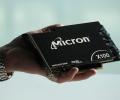
Prime Minister Narendra Modi is set to inaugurate a semiconductor plant in Sanand, Gujarat, and launch multiple development projects worth over Rs 20,000 crore, marking a significant boost to India's semiconductor industry and infrastructure.

Gautam Adani emphasised the importance of energy security and digital infrastructure in shaping geopolitical power, urging India to develop sovereign capabilities across the AI value chain.

The world's largest computer chip manufacturer Intel on Thursday said it was evaluating India as a possible location for manufacturing chips.

New Delhi will substantially reduce tariffs on industrial and agricultural goods while continuing to protect sensitive sectors. Tariffs on some agricultural products that are not traditionally considered sensitive will be brought down to zero, while in the case of relatively sensitive items, duties will be reduced in a graded manner and quotas will be imposed.

The Beijing summit may have reduced immediate diplomatic uncertainty, but it did not resolve the deeper structural contest between the United States and China. That contest appears likely to define the coming decade, notes Varun Arya.

In a move to deepen manufacturing in electronics in India, the Centre is targeting 35-40 per cent value-addition through the yet-to-be launched production-linked incentive (PLI) scheme for electronics components, sources in the government
Micron Technology, a global leader in memory and storage, is considering supplying Made-in-India chips from its Gujarat plant to one of its key global clients, Apple, whose vendors assemble iPhones in the country. Micron is setting up an assembly test marking and packaging (ATMP) plant in Sanand, Gujarat. Currently, Apple vendors import chips for manufacturing iPhones. Sources in the know say the aim is to use part of the production to supply to Micron's clients in India directly.
The government on Wednesday said that a consortium of overseas Indians is expected to take a final decision on whether to set up a semiconductor chip manufacturing facility in India or not by the end of this year.
Prime Minister Narendra Modi inaugurated Micron Technology's semiconductor plant in Sanand, Gujarat, highlighting India's growing presence in the hardware sector and its strong partnership with the United States in AI and chip technologies.

Tata Group is in discussions with some major international companies, including those from Taiwan, for its foray into the semiconductor chip business. The Union government had earlier tried to bring in Taiwanese manufacturers Taiwan Semiconductor Manufacturing Company (TSMC) and United Microelectronics Corporation (UMC) for chip manufacturing in India. A person close to the development said the Tatas have now opened a separate channel for a possible tie-up. Currently, India mostly imports chips, which are fabricated and assembled to put into various applications, including automobiles, renewable power, mobile phones, televisions, and other electronic items.

Adani group on Tuesday announced a $100 billion investment to develop hyperscale, artificial intelligence (AI)-ready data centres powered by renewable energy by 2035. The initiative is expected to catalyse an extra $150 billion in investment across server manufacturing, electrical infrastructure, Cloud platforms, and supporting industries over the next decade.

The Uttar Pradesh government and iPhone maker Foxconn have started discussions to set up an electronics manufacturing unit in the state, sources aware of the development said. The investment pitch was made by Invest UP to Foxconn at the time of the final land allocation for the HCL-Foxconn chip joint venture Vama Sundari.

Tata Electronics on Saturday began the construction of its Rs 27,000-crore chip assembly plant in Assam, which is expected to become operational next year and create 27,000 jobs initially. The plant will produce 4.83 crore chips per day using indigenously-developed technologies. The plant's Bhumi Pujan (foundation stone laying) ceremony was held at the project site at Jagiroad in Morigaon district in the presence of Assam Chief Minister Himanta Biswa Sarma and Tata Sons Chairman N Chandrasekaran.
Infrastructure require for making chips is not available in the country.
Two full-fledged semiconductor fabrication plants are going to come up in India very soon entailing multi-billion dollar investment besides several chip assembly and packaging units, Minister of Electronics and IT Rajeev Chandrasekhar said. In an interview with PTI, the minister confirmed that the two projects include a $8 billion proposal submitted by Israel-based Tower Semiconductors and the other from Tata Group. "I am happy to share this with you and you are probably the first one I'm sharing this with.
Even though India has major strengths in chip design and in making the software that actually commands the processors to execute specific tasks, chip-manufacturing has never been the country's strength.

OSAT majors have concerns about India's ability to provide a stable, predictable, and lasting policy environment for years to come, which is key for making a decision in a capital-intensive business.
India is all set to make its presence felt in the $47 billion global outsourced semiconductor testing and packaging market, an arena where Malaysia and Vietnam have been way ahead so far. The Cabinet last Thursday cleared two projects, the Tata's assembly testing and packaging plant (ATMP) and the Murugappa-owned CG Power with Renesas from Japan as its tech partner. These, together with Micron's assembly and testing plant which is already being constructed in Sanad in Gujarat, will collectively invest Rs 47,300 crore to set up the factories.

The crisis may not be as visible this time, but the stakes are just as high, points out Rajeswari Sengupta.

This is the first Budget in my memory of Budgets over the last half a century which has embraced upfront, enthusiastically and emphatically, technology, modernity and fiscal sobriety, notes Shreekant Sambrani.

Taiwanese electronic contract manufacturer Foxconn on Monday said it has decided to pull out of semiconductor joint venture with Indian conglomerate Vedanta, according to a statement. Foxconn said it is "working to remove the Foxconn name from what now is a fully-owned entity of Vedanta". "Foxconn has no connection to the entity and efforts to keep its original name will cause confusion for future stakeholders," Hon Hai Technology group (Foxconn) said.
The firm has already signed a technology transfer deal with SemIndia, which is setting up a fab plant near Hyderabad
'Our plan to set up a semiconductor facility in India is back on the table'

The first leg of Micron's semiconductor play in Sanand is crucial for the company to sprint towards India's goal of joining the chip race.

iPhone maker Apple hit an all-time revenue record in India during September quarter, marking a strong growth streak in the world's second largest smartphone market where the tech titan has been deepening retail footprint and local manufacturing.
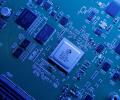
Taiwan is keen to collaborate with India and help it become a leader in the semiconductor space, Jason Ho, chairman of the Taiwan Chamber of Commerce in India, said, asserting that the Taiwanese companies have the supply chain for things that the Indian market needs. Manufacturing semiconductors - used in electric and hybrid cars, drones, and communication devices - is fairly complicated, entails huge investment, and can be a cumbersome process.

In an event-heavy week ahead, stock markets are expected to track Q3 corporate earnings from several blue-chip firms, including TCS and Infosys, while inflation data and global trends would also dictate investors' sentiment, analysts said.

US President Donald Trump has said that India should not be "dumping" rice into the United States market and he will "take care" of it, while stressing that tariffs will solve the "problem" easily.
The South Korea based Intellect Inc on Monday signed a memorandum of understanding with Andhra Pradesh government to set up India's first silicon chip manufacturing facility on the city outskirts with an investment of $600 million.
